
Tonight is Shab-e-Jummah, the blessed night before Friday, and tomorrow, Friday 27 November, hearts will turn toward the mosque, the prayer mat and the raised hands of dua. Jummah is the best of days: a weekly Eid of mercy, forgiveness and answered prayers. This collection of jummah mubarak poetry in urdu gathers fifteen verified couplets on dua, blessings, peace and gratitude by named poets — verses you can read tonight, reflect on tomorrow, and share as a Jummah Mubarak status with the people you love.
Shab-e-Jummah: The Night of Dua
The night before Friday is a time to ask. These five couplets teach the etiquette of asking: ask for Him alone, ask from the heart, and ask with humility.
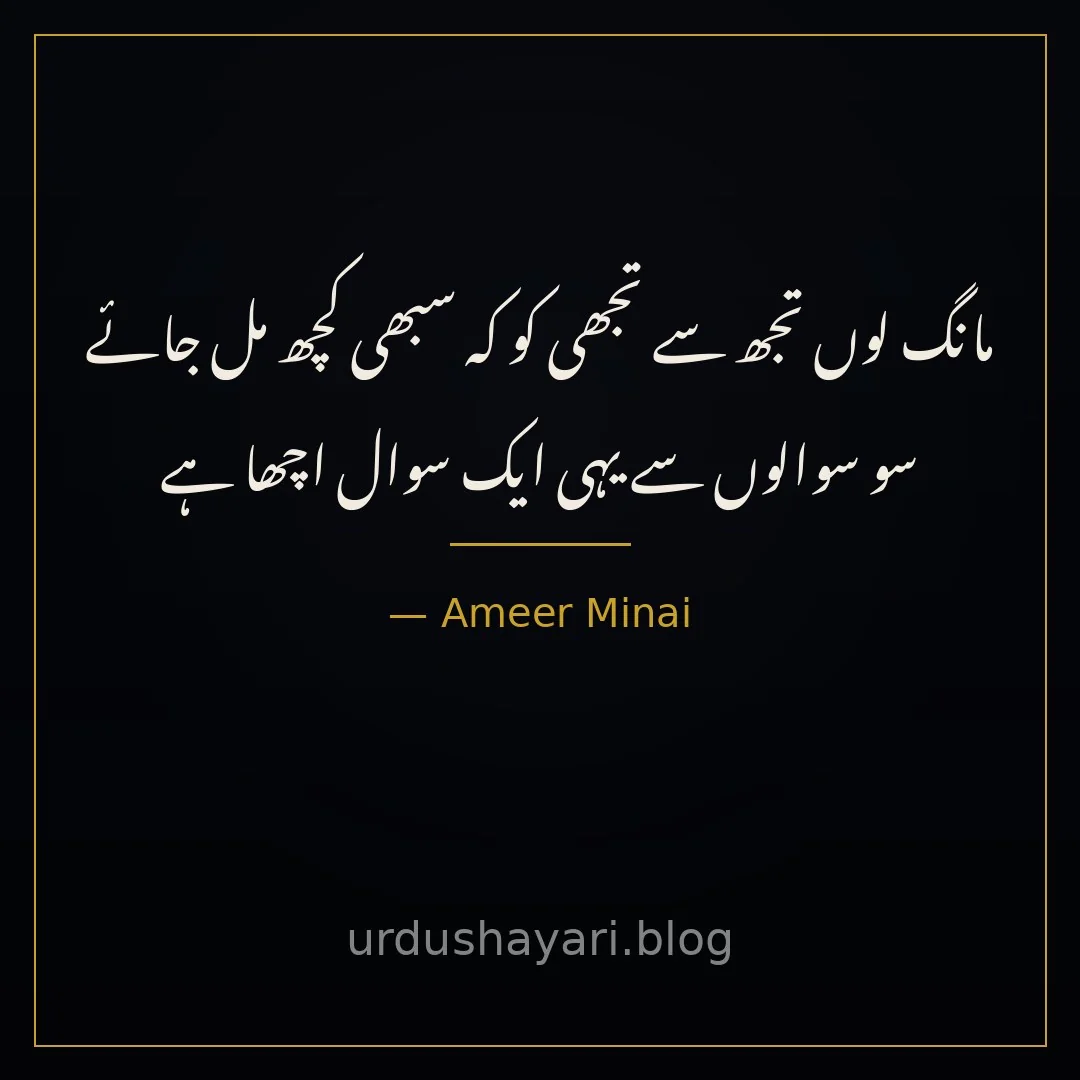
سو سوالوں سے یہی ایک سوال اچھا ہے
Maang loon tujh se tujhi ko ke sabhi kuchh mil jaaye / Sau sawaalon se yahi ek sawaal achchha hai
— Ameer Minai
Meaning: The finest prayer of all: instead of a hundred requests, ask God for God Himself — whoever finds Him has found everything.
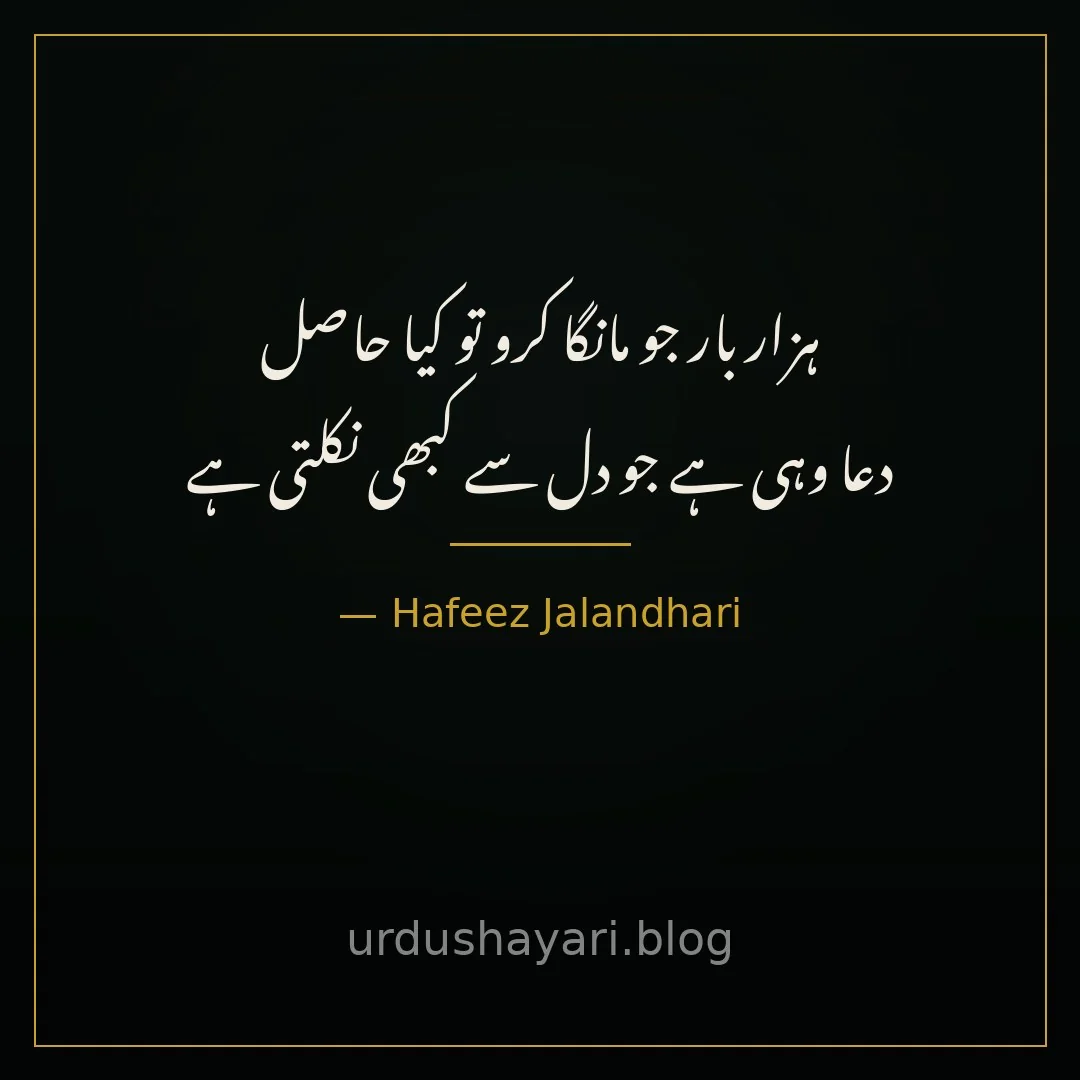
دعا وہی ہے جو دل سے کبھی نکلتی ہے
Hazaar baar jo maanga karo to kya haasil / Dua wahi hai jo dil se kabhi nikalti hai
— Hafeez Jalandhari
Meaning: Asking a thousand times by habit gains nothing; the true dua is the one that rises, even once, from the depths of the heart.
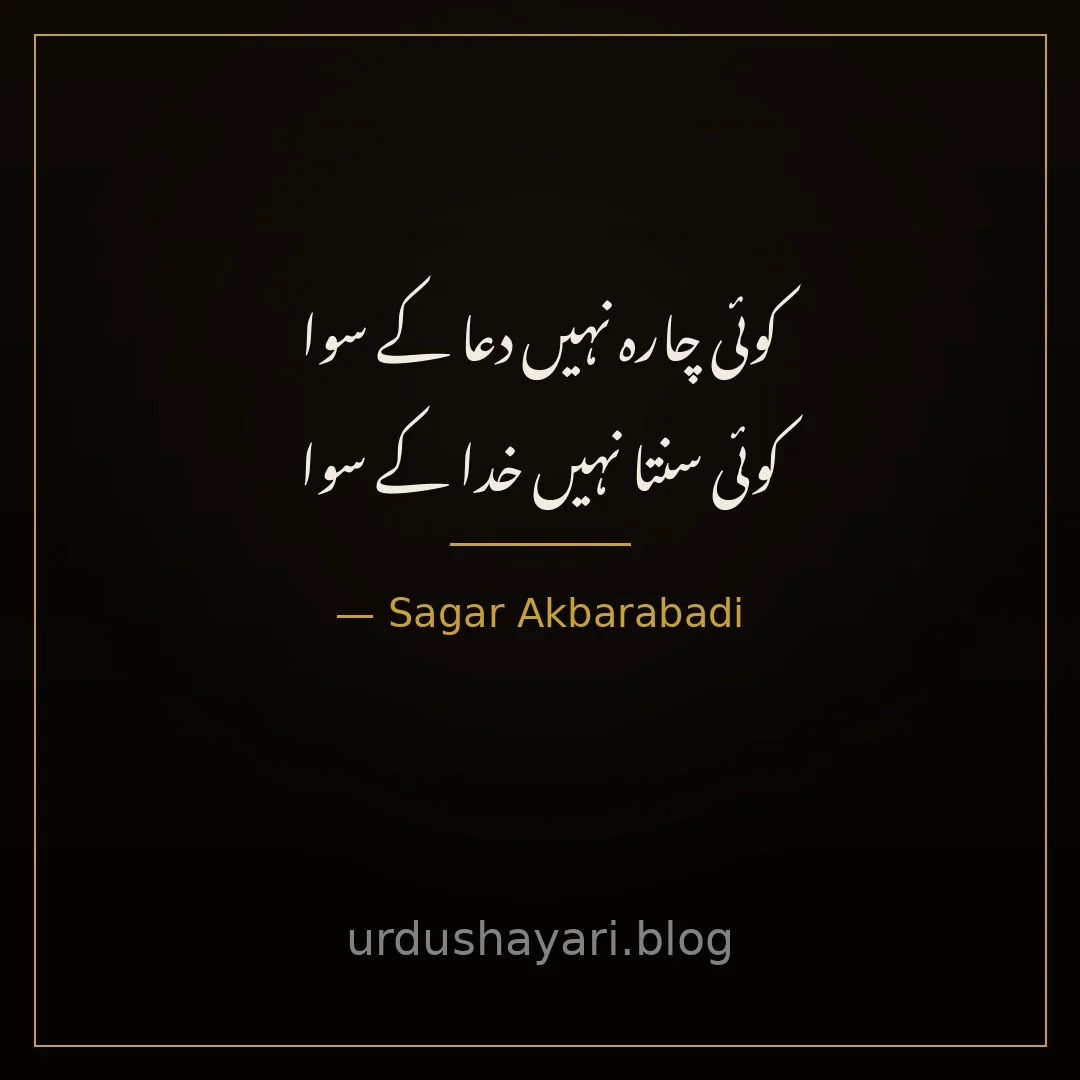
کوئی سنتا نہیں خدا کے سوا
Koi chaara nahin dua ke siwa / Koi sunta nahin Khuda ke siwa
— Sagar Akbarabadi
Meaning: When every door closes, one remains open: there is no remedy except prayer, and no listener except God.
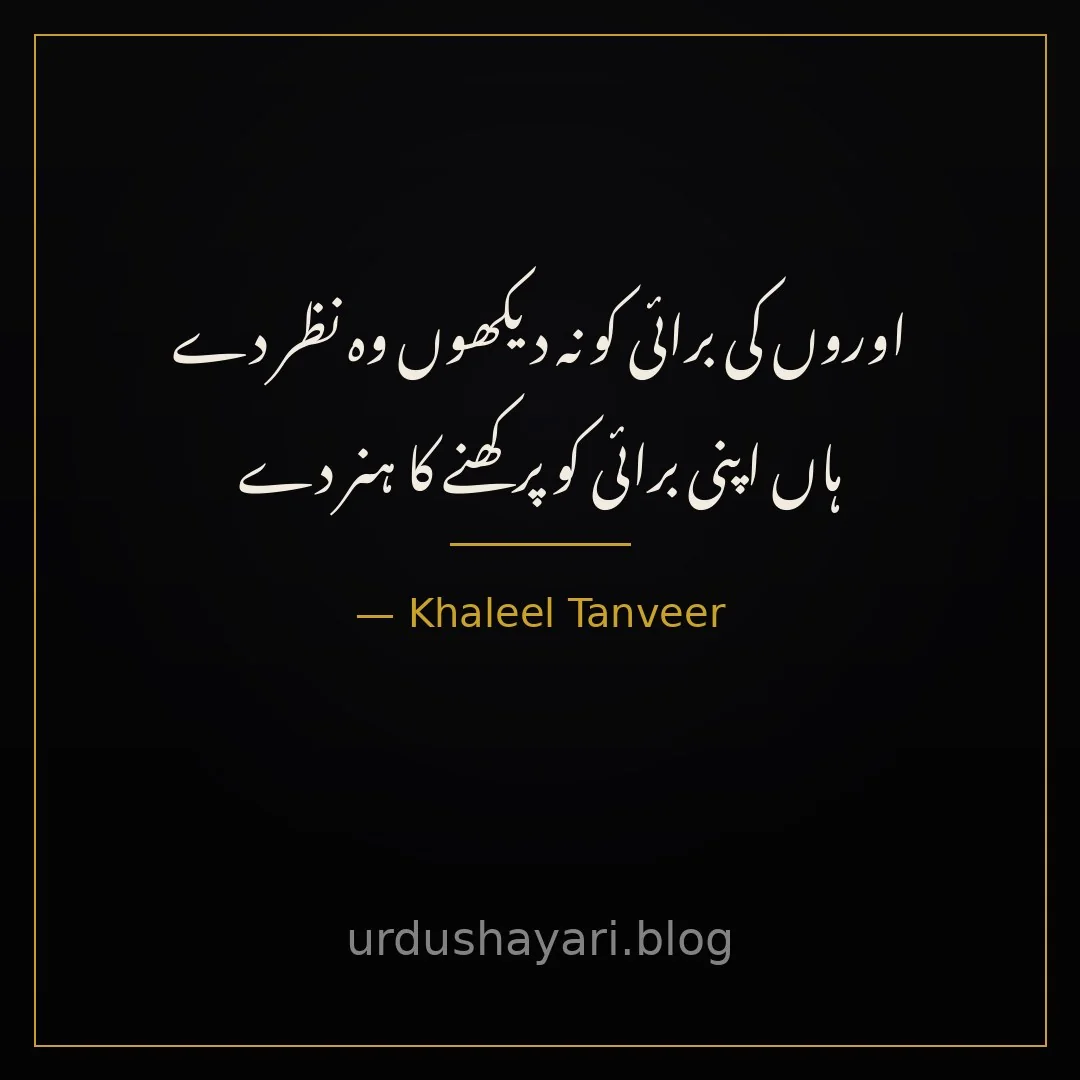
ہاں اپنی برائی کو پرکھنے کا ہنر دے
Auron ki buraai ko na dekhoon wo nazar de / Haan apni buraai ko parakhne ka hunar de
— Khaleel Tanveer
Meaning: A beautiful Jummah-night prayer: give me eyes that overlook the faults of others, and the skill to examine my own.
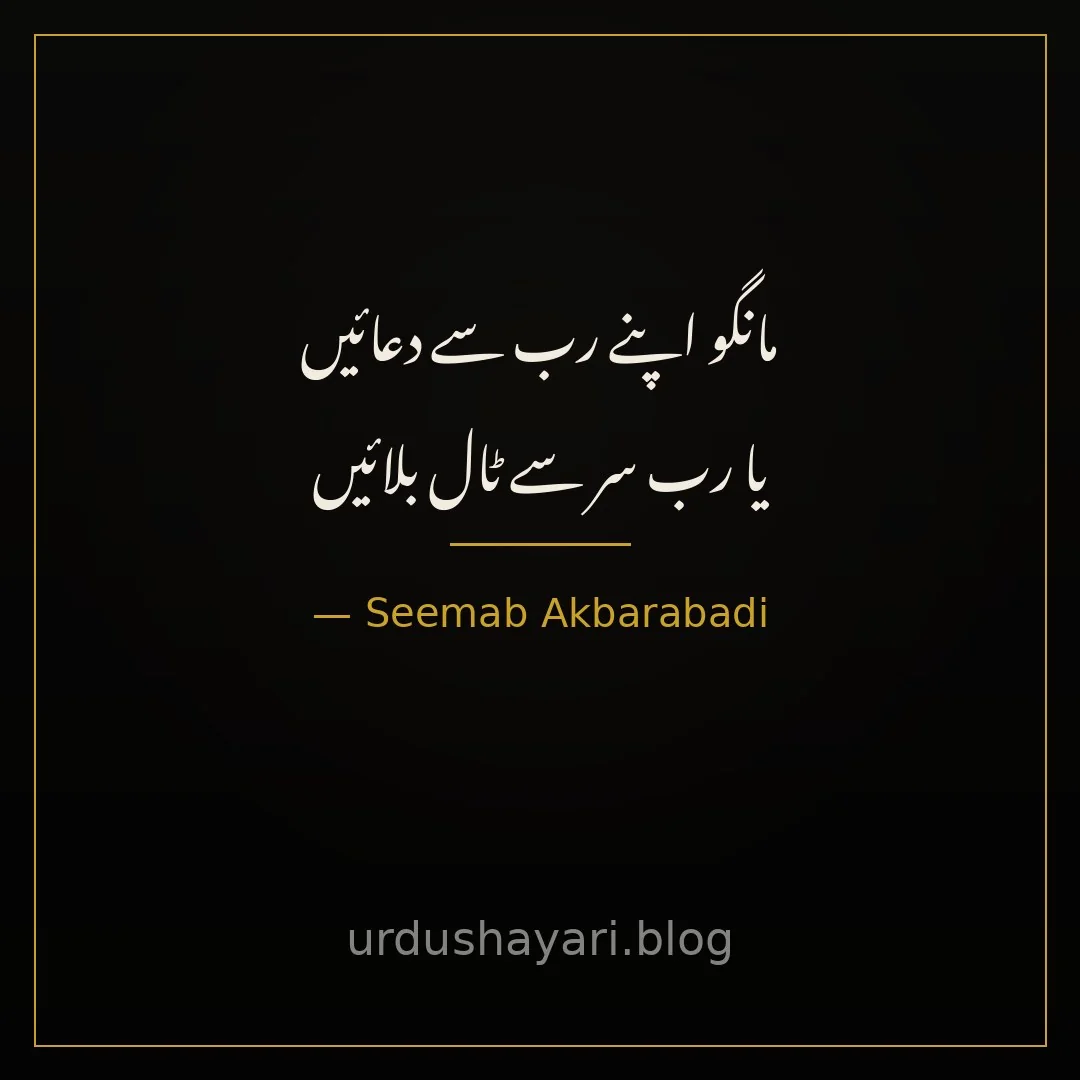
یا رب سر سے ٹال بلائیں
Maango apne Rab se duaaein / Ya Rab sar se taal balaaein
— Seemab Akbarabadi
Meaning: From a beloved evening dua: ask your Lord for prayers, and plead — O Lord, turn every calamity away from our heads.
Duas of Protection, Guidance and Gratitude
Friday is also a day of gratitude and protection. These couplets pray for the straight path, for service to others, and for the trembling humility of a heart that knows its Lord.
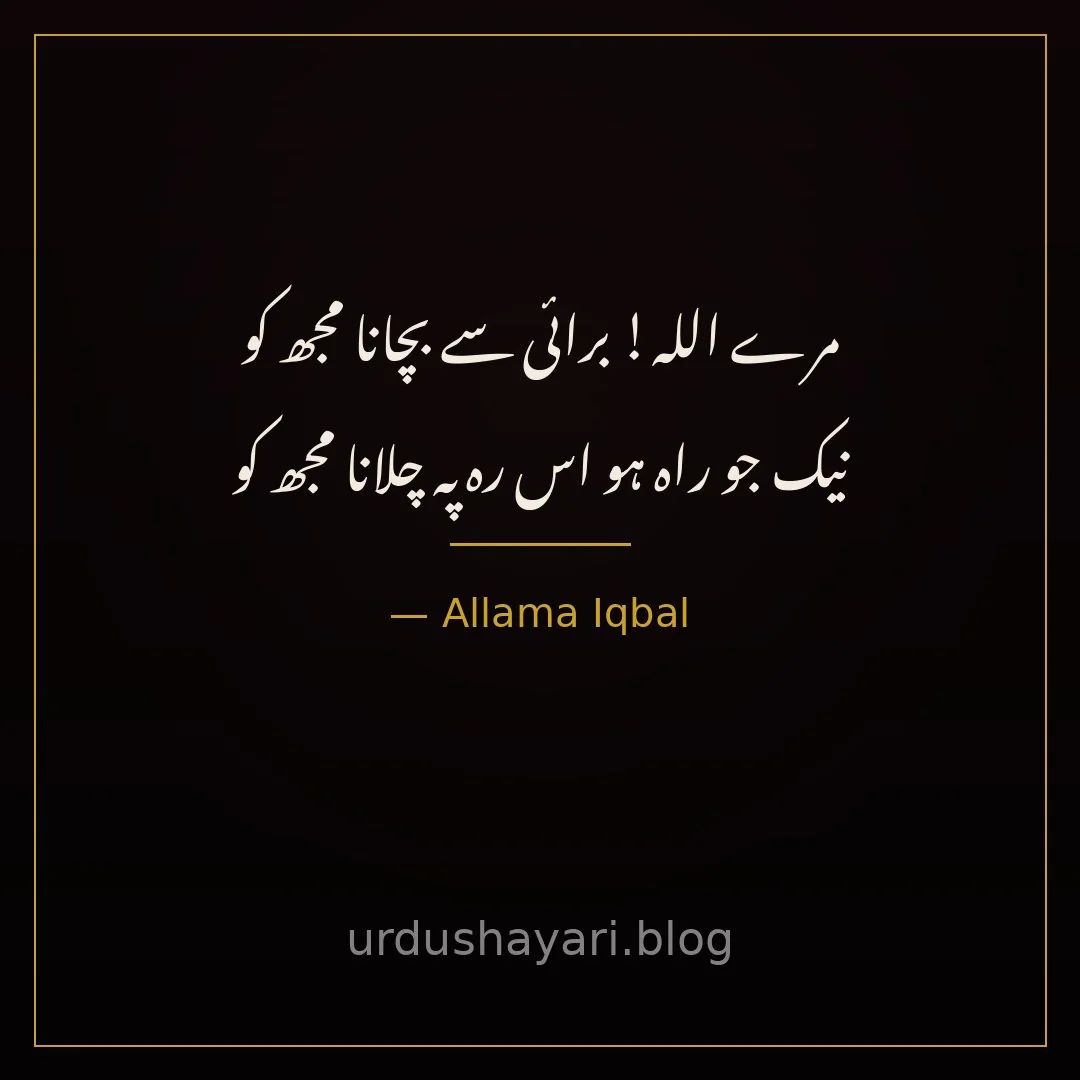
نیک جو راہ ہو اس رہ پہ چلانا مجھ کو
Mere Allah! buraai se bachaana mujh ko / Nek jo raah ho us rah pe chalaana mujh ko
— Allama Iqbal
Meaning: The closing prayer of Iqbal’s famous dua: my God, protect me from evil, and walk me on whichever path is righteous.
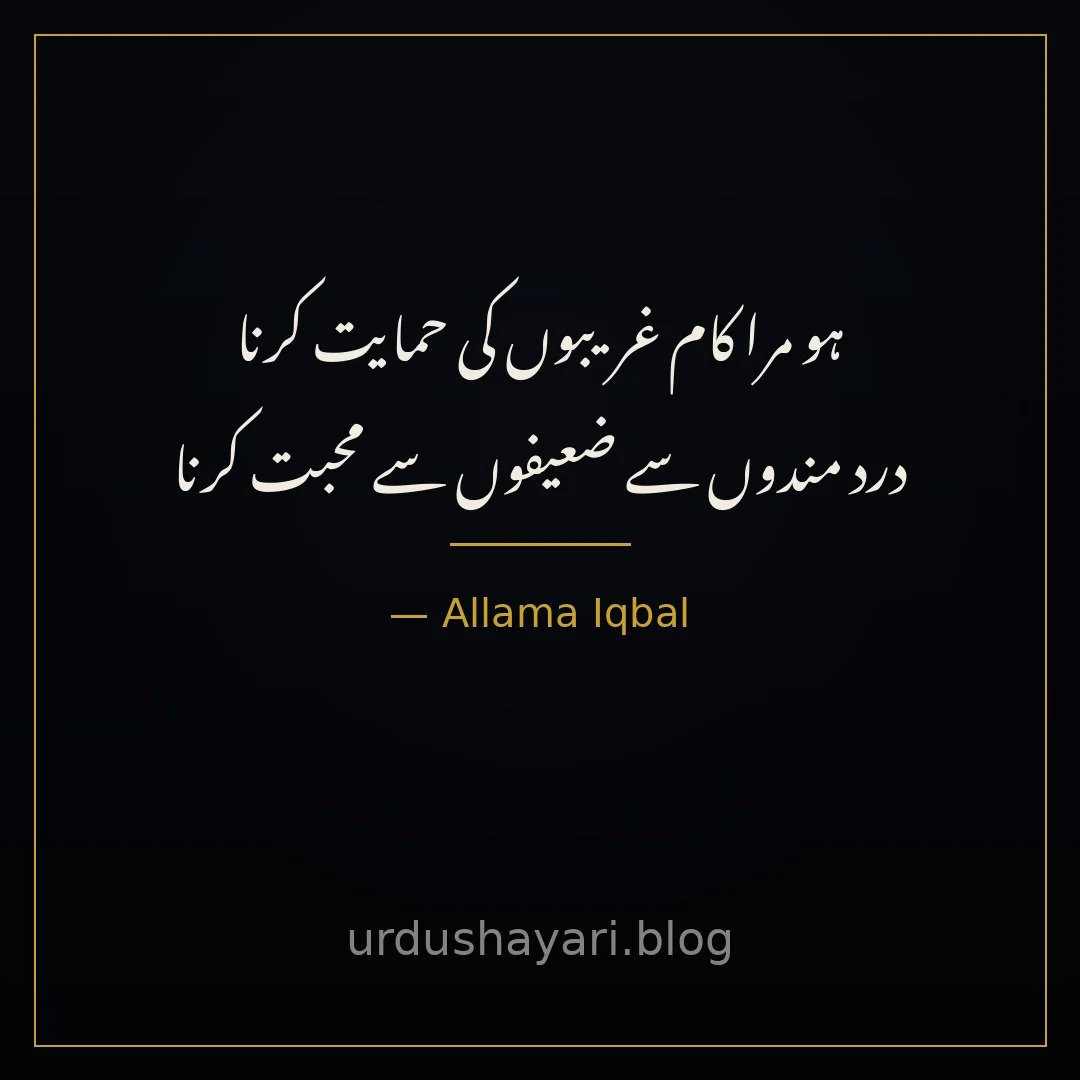
درد مندوں سے ضعیفوں سے محبت کرنا
Ho mera kaam ghareebon ki himaayat karna / Dard-mandon se za’eefon se mohabbat karna
— Allama Iqbal
Meaning: Iqbal prays for a life of service: may my work be defending the poor, and loving the suffering and the frail.
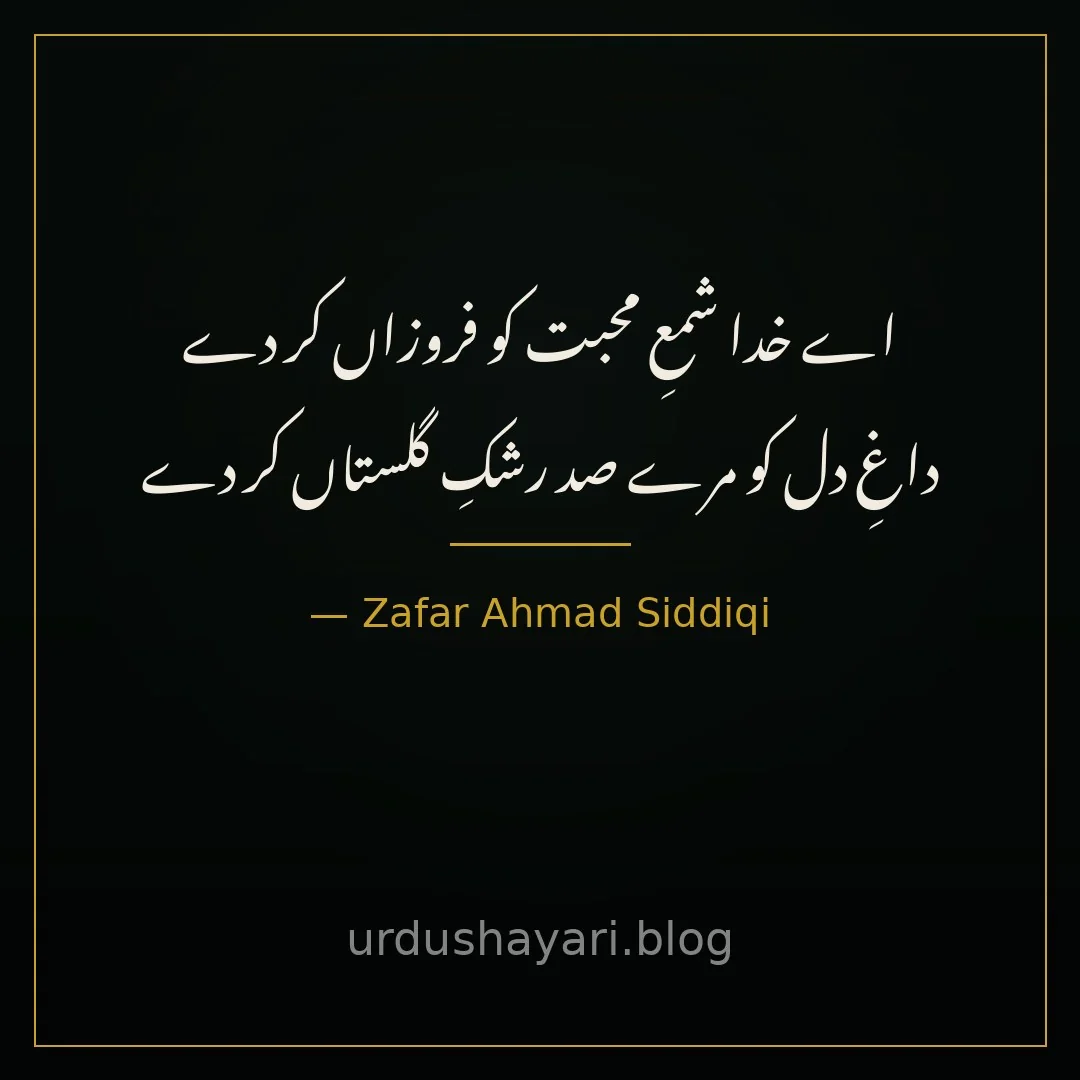
داغِ دل کو مرے صد رشکِ گلستاں کر دے
Ai Khuda sham-e-mohabbat ko farozaan kar de / Daagh-e-dil ko mere sad-rashk-e-gulistaan kar de
— Zafar Ahmad Siddiqi
Meaning: O God, light the candle of love, and turn the wound of my heart into a garden that a hundred gardens would envy.
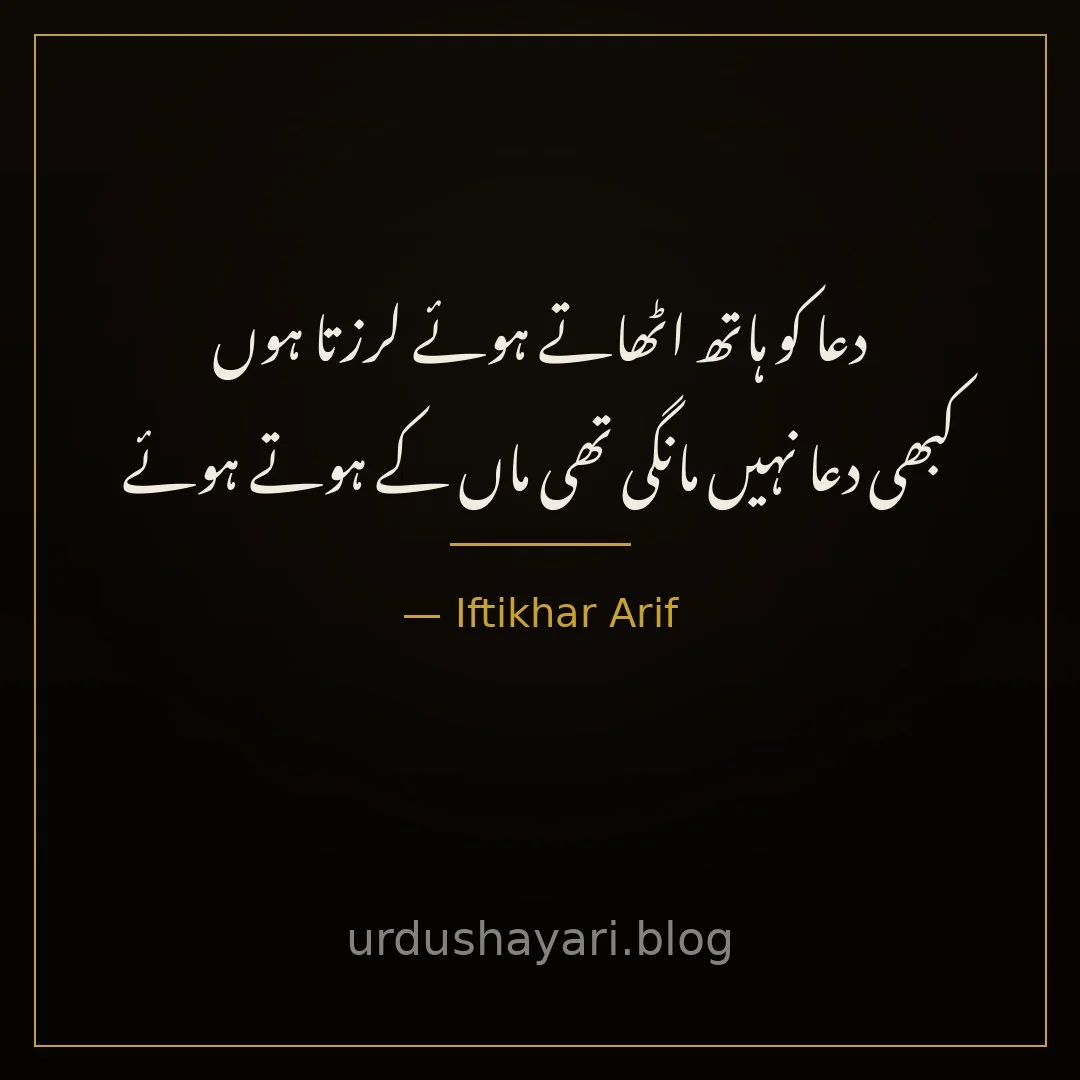
کبھی دعا نہیں مانگی تھی ماں کے ہوتے ہوئے
Dua ko haath uthaate hue larazta hoon / Kabhi dua nahin maangi thi maan ke hote hue
— Iftikhar Arif
Meaning: My hands tremble as I raise them in prayer — while my mother lived, I never needed to ask for anything myself.
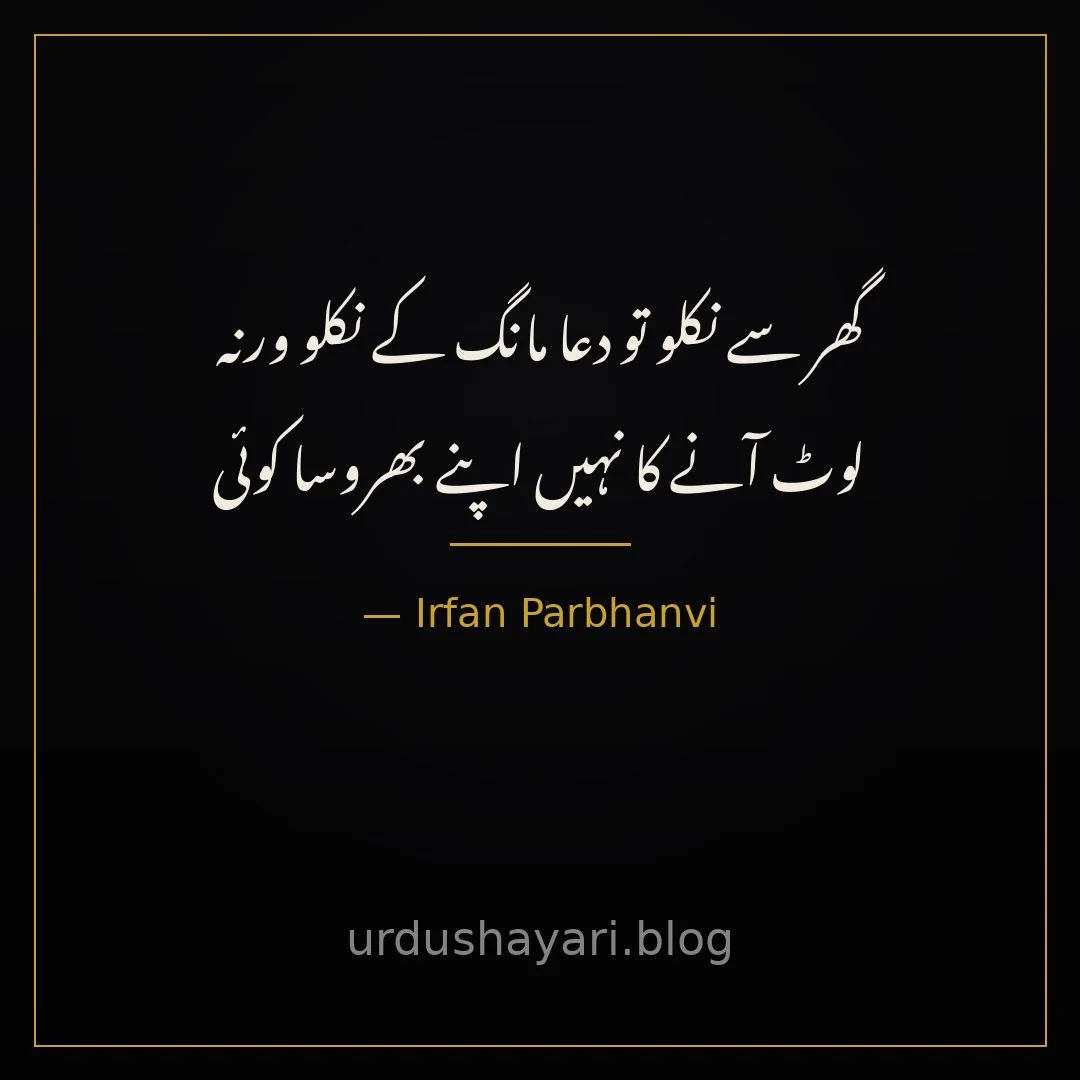
لوٹ آنے کا نہیں اپنے بھروسا کوئی
Ghar se niklo to dua maang ke niklo warna / Laut aane ka nahin apne bharosa koi
— Irfan Parbhanvi
Meaning: Leave home only after praying, for no one can trust their own strength to bring them safely back — a perfect verse for the Friday journey to the mosque.
Blessings to Share on Jummah Morning
Jummah Mubarak is a greeting of blessings. These final couplets are made for sharing: prayers for the young, for friends setting out, and for the whole community of believers.
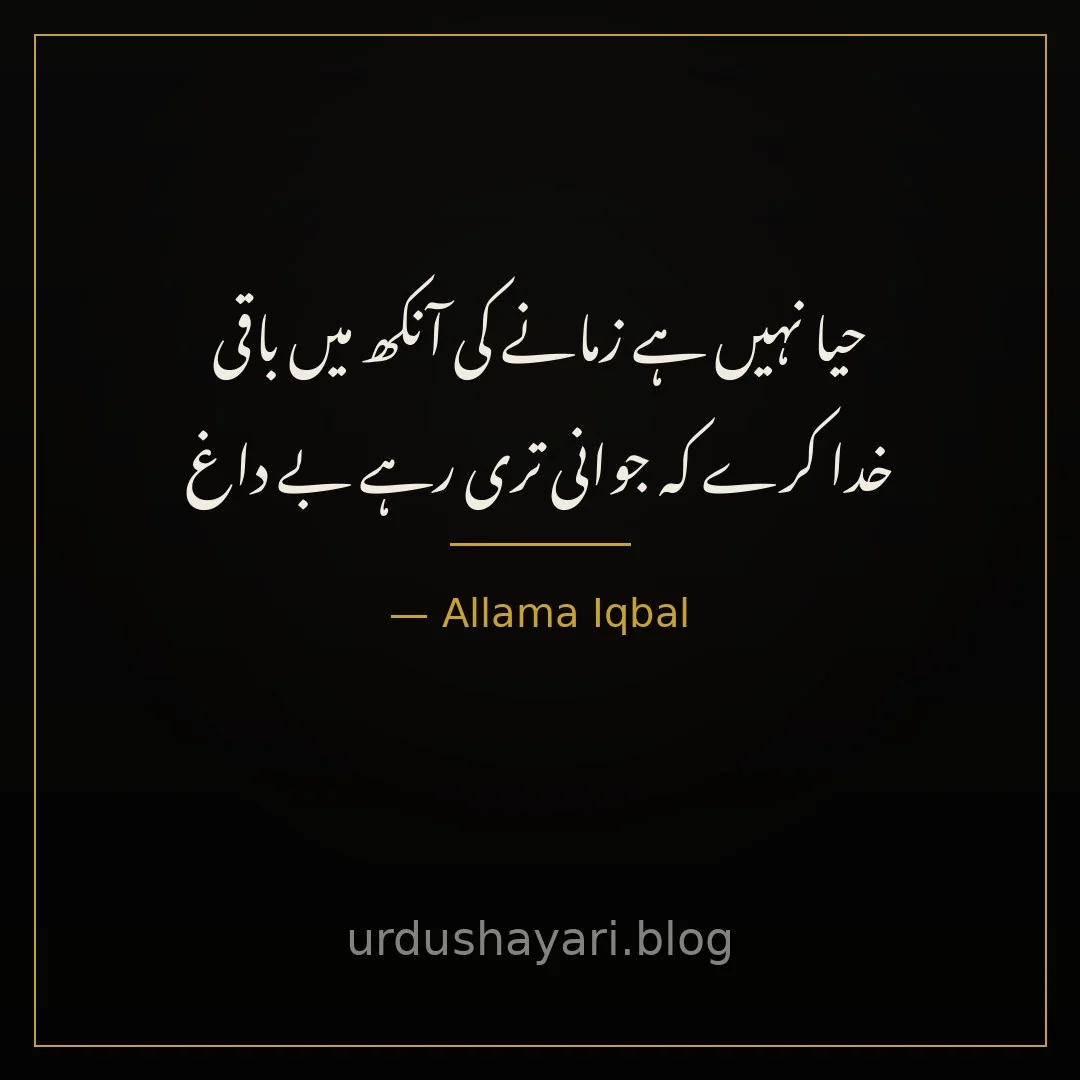
خدا کرے کہ جوانی تری رہے بے داغ
Haya nahin hai zamaane ki aankh mein baaqi / Khuda kare ke jawaani teri rahe be-daagh
— Allama Iqbal
Meaning: In an age that has lost its modesty, Iqbal blesses the young: may God keep your youth spotless.
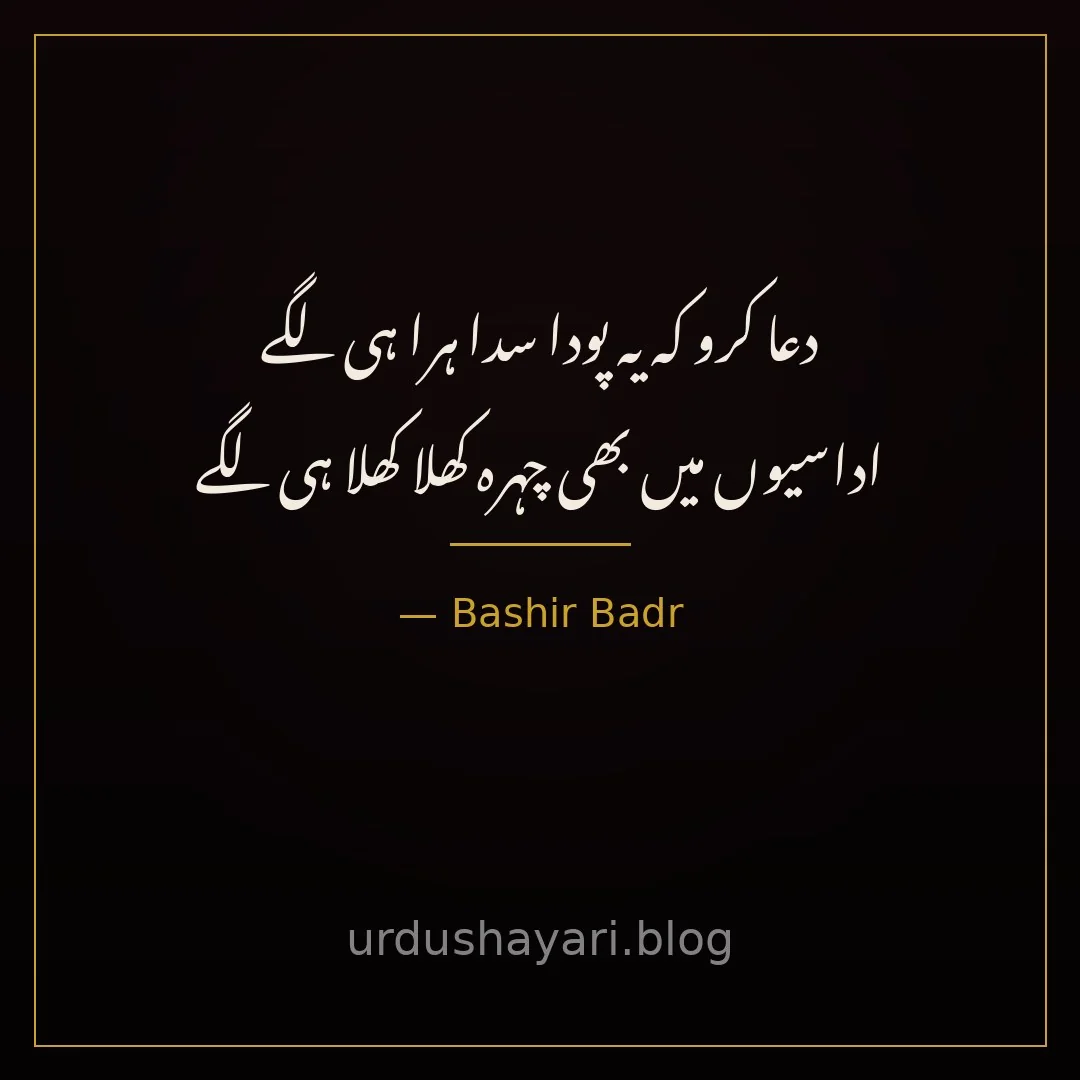
اداسیوں میں بھی چہرہ کھلا کھلا ہی لگے
Dua karo ke ye pauda sada hara hi lage / Udaasiyon mein bhi chehra khila khila hi lage
— Bashir Badr
Meaning: Pray that this plant stays forever green — a blessing that a loved one’s face keeps blooming even in seasons of sadness.
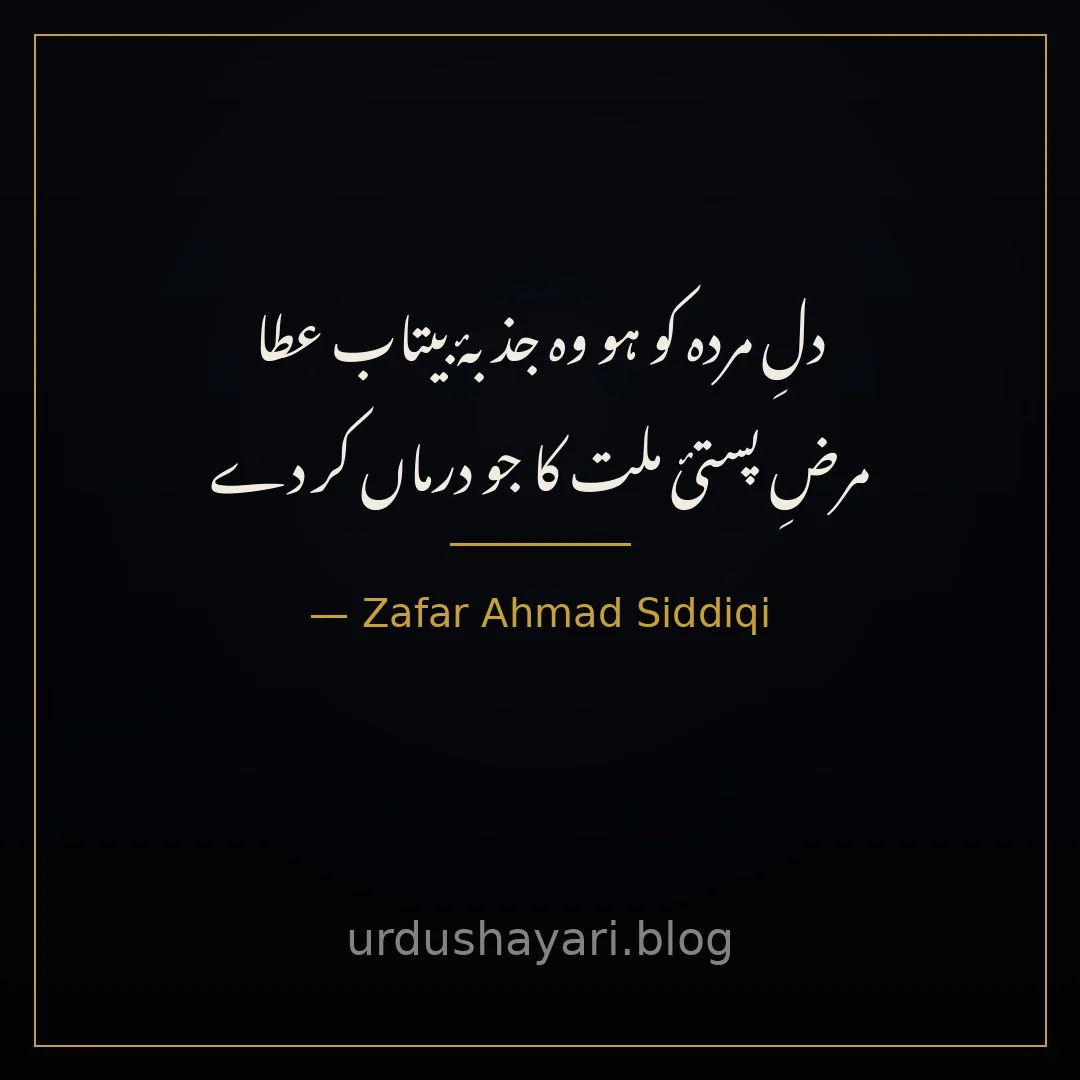
مرضِ پستئ ملت کا جو درماں کر دے
Dil-e-murda ko ho wo jazba-e-betaab ata / Maraz-e-pasti-e-millat ka jo darmaan kar de
— Zafar Ahmad Siddiqi
Meaning: A dua for revival: grant the dead heart a restless passion that becomes the cure for the community’s decline — a prayer for the whole ummah on its best day.
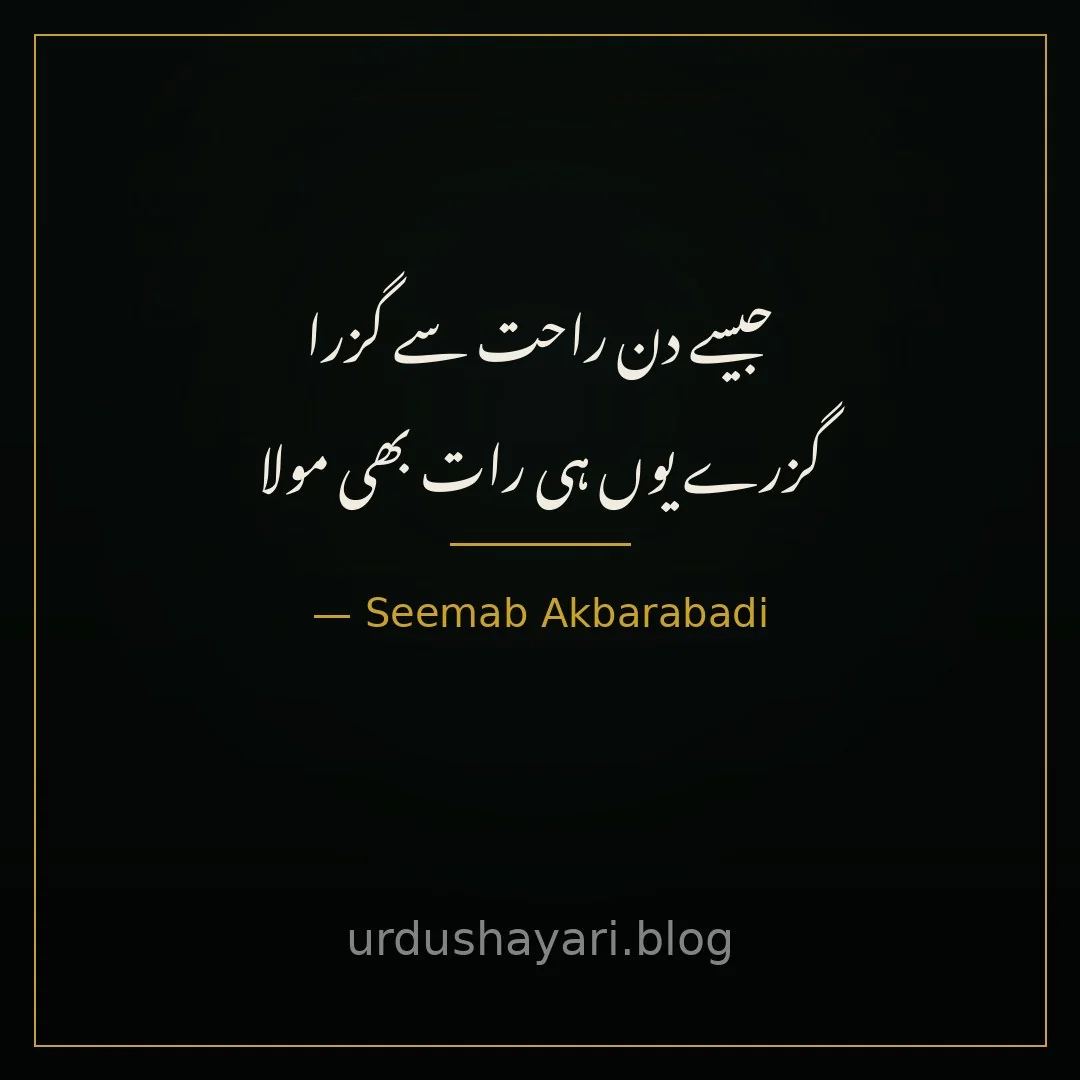
گزرے یوں ہی رات بھی مولا
Jaise din raahat se guzra / Guzre yoon hi raat bhi Maula
— Seemab Akbarabadi
Meaning: As the day passed in comfort, Master, let the night pass the same way — a gentle Shab-e-Jummah prayer for peaceful rest.
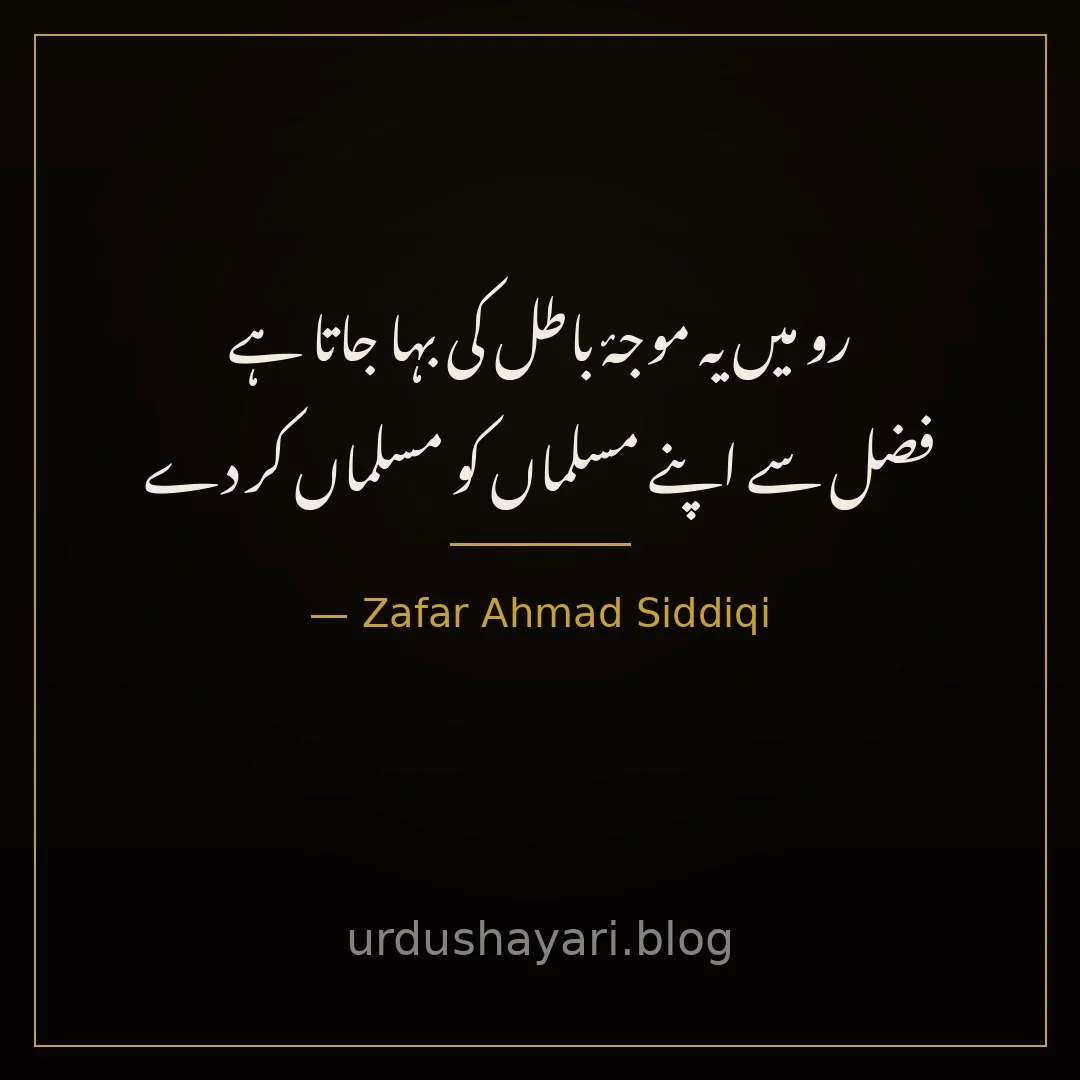
فضل سے اپنے مسلماں کو مسلماں کر دے
Rau mein ye mauja-e-baatil ki baha jaata hai / Fazl se apne Musalmaan ko Musalmaan kar de
— Zafar Ahmad Siddiqi
Meaning: The closing plea: swept along by the wave of falsehood, the believer begs — by Your grace, O God, make the Muslim a true Muslim.
Why These Verses Belong to Jummah
Jummah is the day of congregation, durood and accepted dua — and every couplet above carries one of its gifts. Ameer Minai teaches what to ask for, Hafeez Jalandhari teaches how to ask, and Khaleel Tanveer teaches what a clean heart asks first. Iqbal’s prayers add guidance and service, while the blessings of Bashir Badr and the revival dua of Zafar Ahmad Siddiqi turn private prayer into a gift for the whole community. Read them tonight, and tomorrow’s Friday will begin with a heart already turned toward gratitude.
Frequently Asked Questions
What is the best jummah mubarak shayari to share on WhatsApp?
Short dua couplets work best as a status. Bashir Badr’s “Dua karo ke ye pauda sada hara hi lage” and Iqbal’s blessing “Khuda kare ke jawaani teri rahe be-daagh” are short, warm and easy to forward as jummah mubarak status poetry.
Where can I find jumma mubarak poetry in urdu text to copy?
All fifteen couplets above are given in full Urdu text with Roman Urdu and English meanings, so you can copy any verse directly for your Friday message, status or greeting card.
What is shab e jummah poetry?
Shab-e-Jummah is the night before Friday, a time believers spend in dua and remembrance. Seemab Akbarabadi’s evening dua verses in this collection — asking the Lord to turn away calamities and grant a peaceful night — are classic shab e jummah poetry.
Which famous poets wrote about dua and blessings?
Allama Iqbal, Ameer Minai, Hafeez Jalandhari, Iftikhar Arif and Bashir Badr all wrote celebrated dua couplets. Their verified verses in this article come from Rekhta’s collections on dua and their famous prayer compositions.
Why is Friday special in Islam?
Friday (Jummah) is described as the best day on which the sun rises: it carries a congregational prayer, an hour in which duas are accepted, and special reward for sending durood. That is why greeting others with Jummah Mubarak and sharing blessings is a beloved weekly tradition.
Conclusion
Jummah Mubarak to you and your family. May this Friday bring accepted duas, a protected path and a heart full of gratitude. Choose your favourite couplet from this collection, share it tonight for Shab-e-Jummah or tomorrow morning, and keep the chain of blessings moving.