
Love is the emotion that makes us human. It is the heartbeat that has moved poets’ pens for centuries — Urdu poetry, in fact, is love poetry by another name. From the sighs of Mir to the wit of Ghalib, from the delicacy of Momin to the soaring vision of Iqbal, every generation of poets has painted ishq in its own colors.
Ishq is not merely a feeling; it is a state of being — sometimes the spring of union, sometimes the tears of separation. That is why love poetry touches every heart: every heart has loved, or lost a love, at some point in its life.
دلِ ناداں تجھے ہوا کیا ہے
آخر اس درد کی دوا کیا ہے
dil-e-naadaan tujhe hua kya hai / aakhir is dard ki dawa kya hai
— مرزا غالب
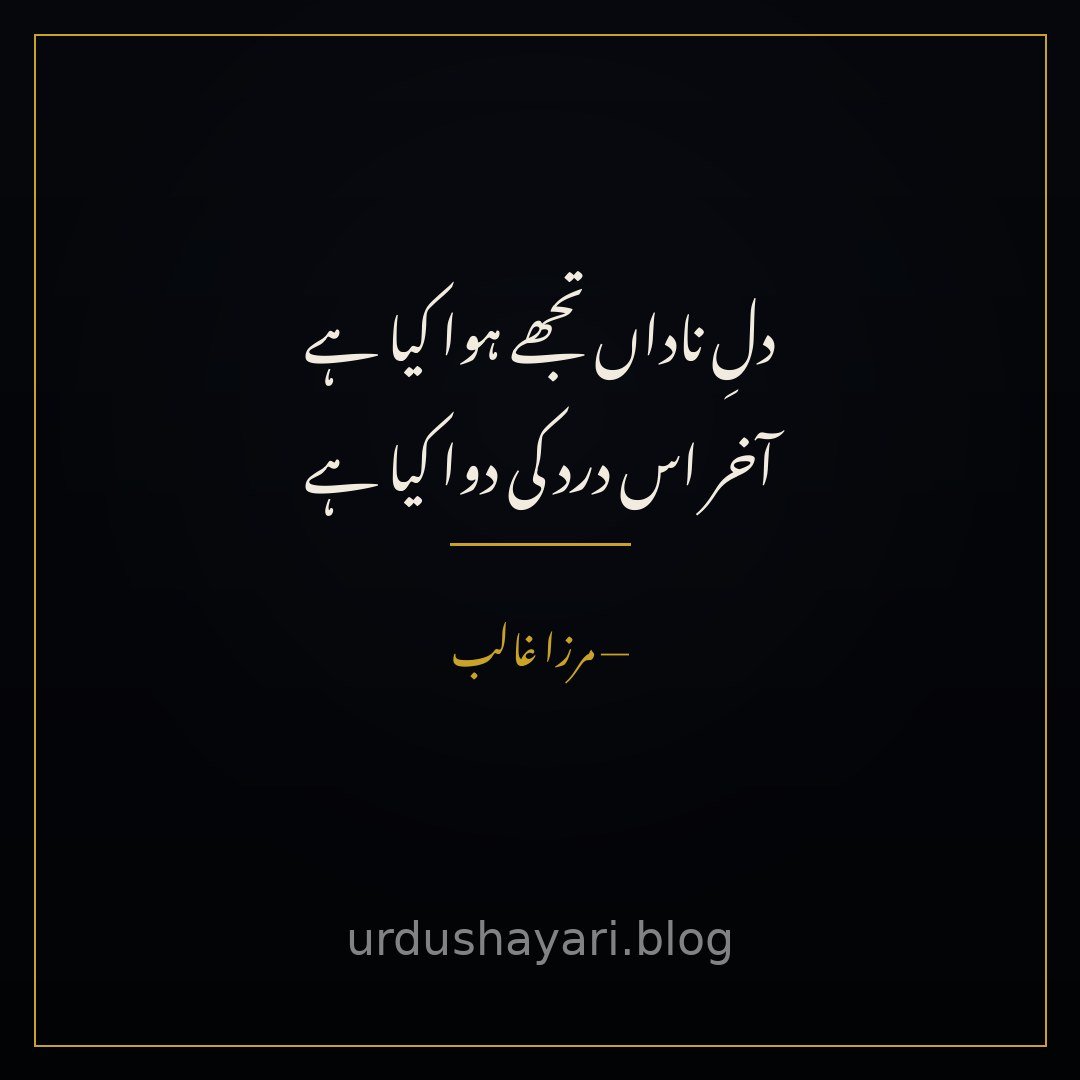
Ghalib addresses his own heart as “naadaan” — naive — a heart afflicted by the pain of love yet unaware of its cure. This is the helplessness of every lover: the pain is one’s own, but the remedy is unknown. The couplet captures that moment when the heart complains, and the poet can only ask it, in gentle mockery, what has come over it.
تم میرے پاس ہوتے ہو گویا
جب کوئی دوسرا نہیں ہوتا
tum mere paas hote ho goya / jab koi doosra nahin hota
— مومن خان مومن
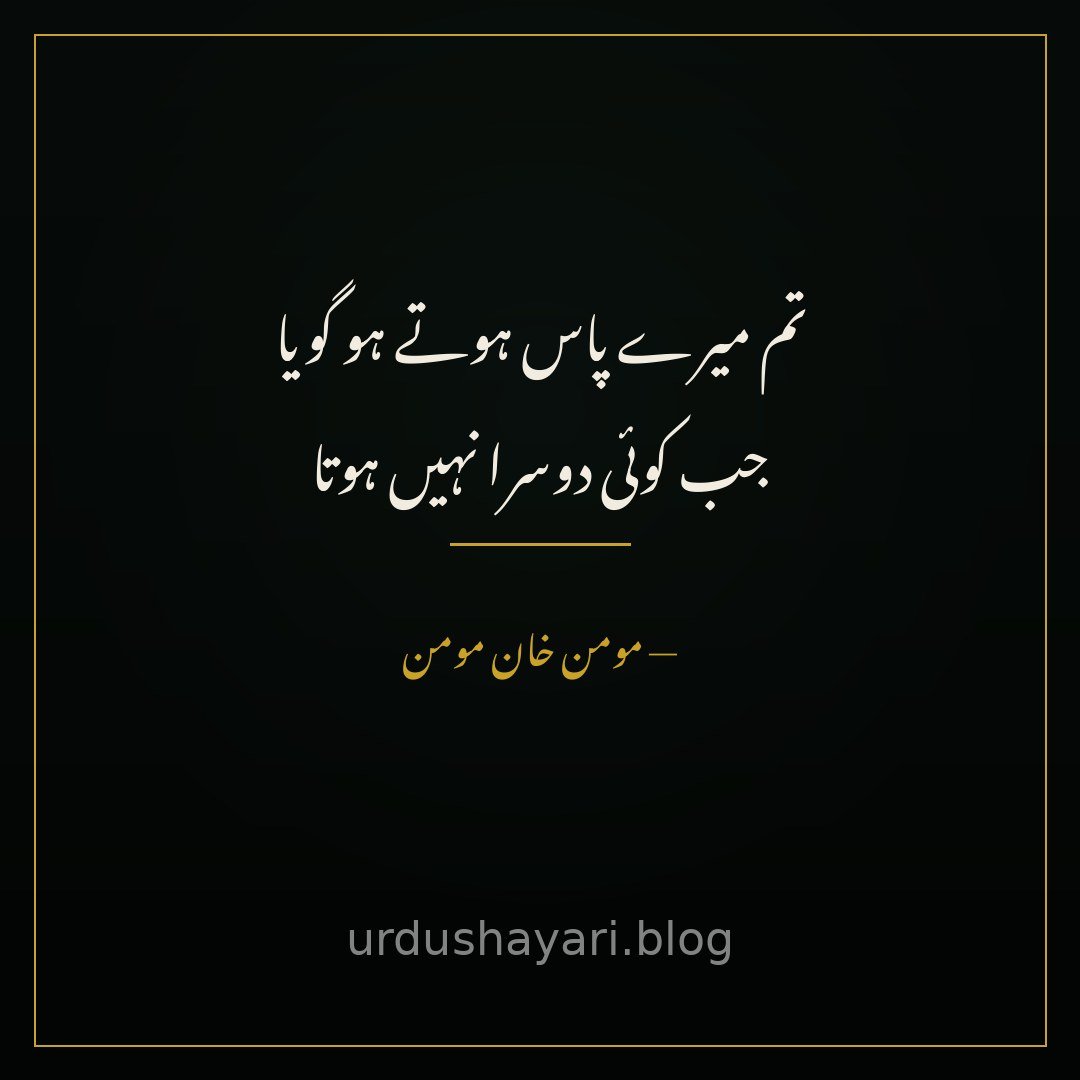
Momin says the beloved’s memory is so intense that even in solitude, her presence is felt. When no one else is near, the beloved’s image is closest of all — that is the depth of true love. This couplet is celebrated as one of the most beautiful expressions of imagined closeness in all of Urdu poetry.
پتا پتا بوٹا بوٹا حال ہمارا جانے ہے
جانے نہ جانے گل ہی نہ جانے، باغ تو سارا جانے ہے
patta patta boota boota haal hamara jaane hai / jaane na jaane gul hi na jaane, baagh to saara jaane hai
— میر تقی میر
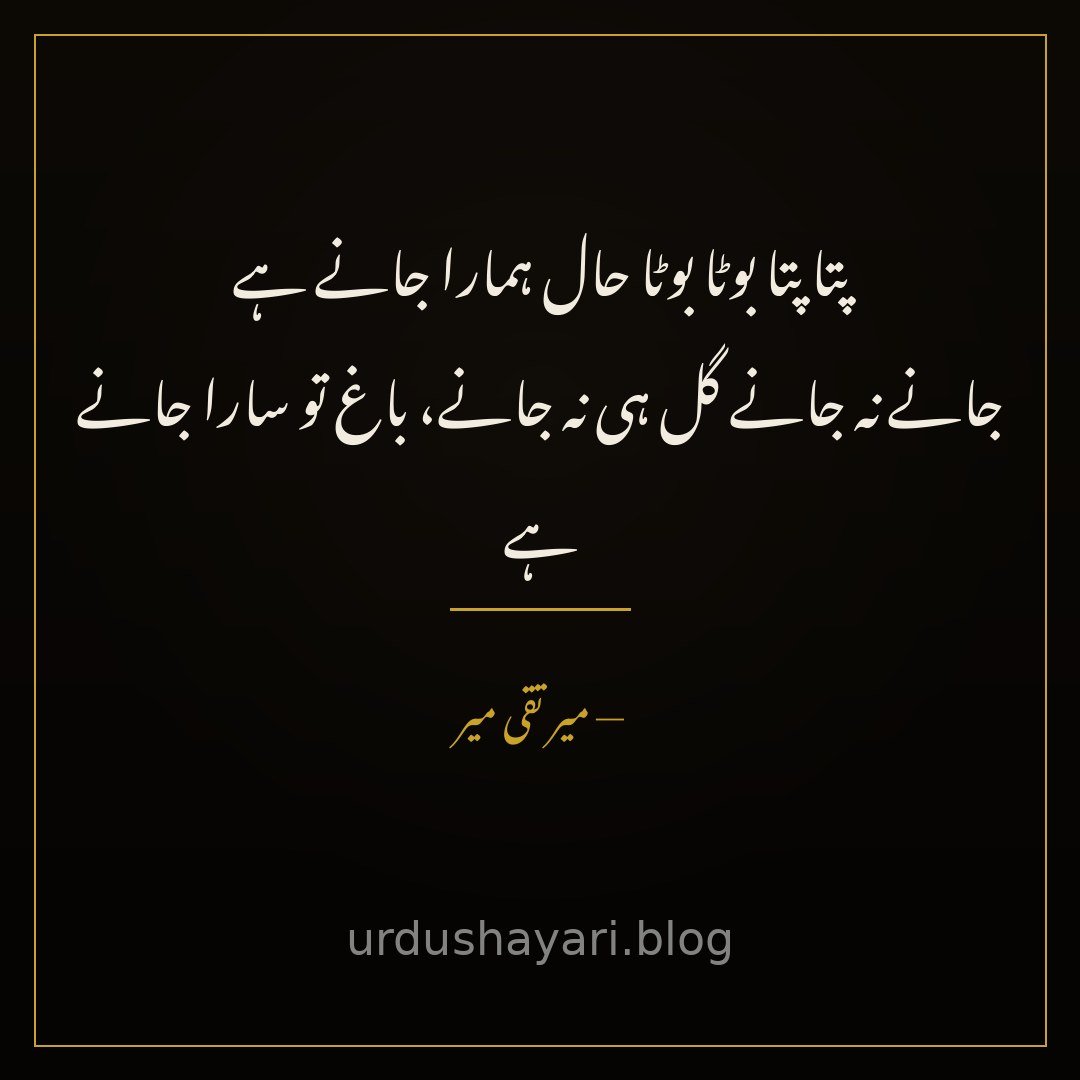
Mir says every leaf and every shrub knows his condition — only the flower for whose sake he suffers does not. The whole universe feels the lover’s pain, yet the beloved remains unaware; that is love’s greatest helplessness. The image of nature as a silent witness gives the couplet its lasting power.
عشق کی اک جست نے طے کر دیا قصہ تمام
اس زمین و آسماں کو بے کراں سمجھا تھا میں
ishq ki ik just ne tay kar diya qissa tamaam / is zameen-o-aasmaan ko be-karaan samjha tha main
— علامہ اقبال
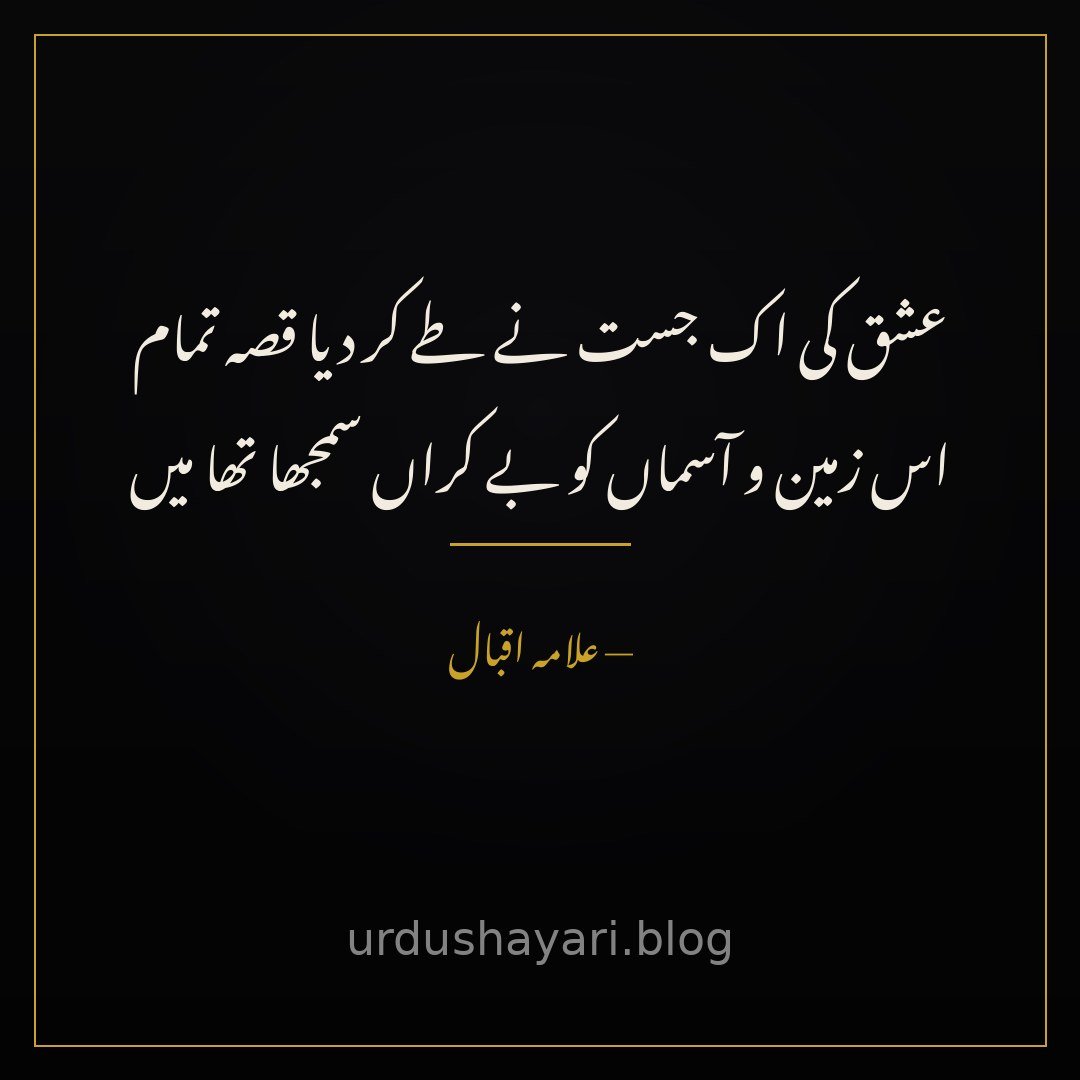
Iqbal says a single leap of love covered a distance he had thought boundless. Love has the power to make the impossible possible — that is the declaration of this verse. Where reason sees an endless desert between the lover and the goal, ishq crosses it in one bound.
محبت میں نہیں ہے فرق جینے اور مرنے کا
اسی کو دیکھ کر جیتے ہیں جس کافر پہ دم نکلے
mohabbat mein nahin hai farq jeene aur marne ka / usi ko dekh kar jeete hain jis kaafir pe dam nikle
— مرزا غالب
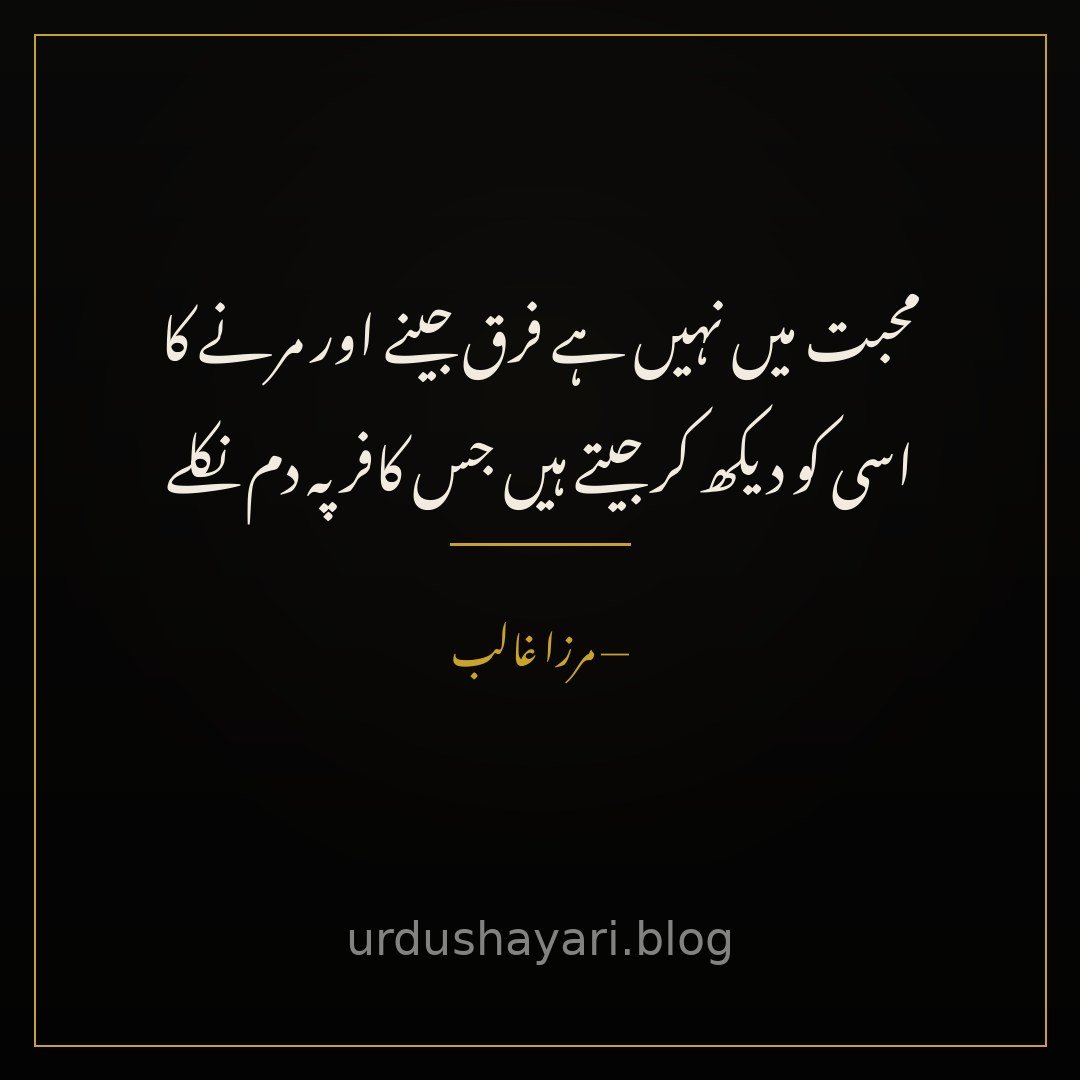
For Ghalib, in love there is no difference between living and dying. The lover lives by gazing at the very beloved for whom he would give his life — the beloved is both life and death, and in love the boundary between the two dissolves. It is a daring, almost startling image that only Ghalib could carry off with such grace.
غضب کیا ترے وعدے پہ اعتبار کیا
تمام رات قیامت کا انتظار کیا
ghazab kiya tere waade pe aitbaar kiya / tamaam raat qayamat ka intezaar kiya
— داغ دہلوی
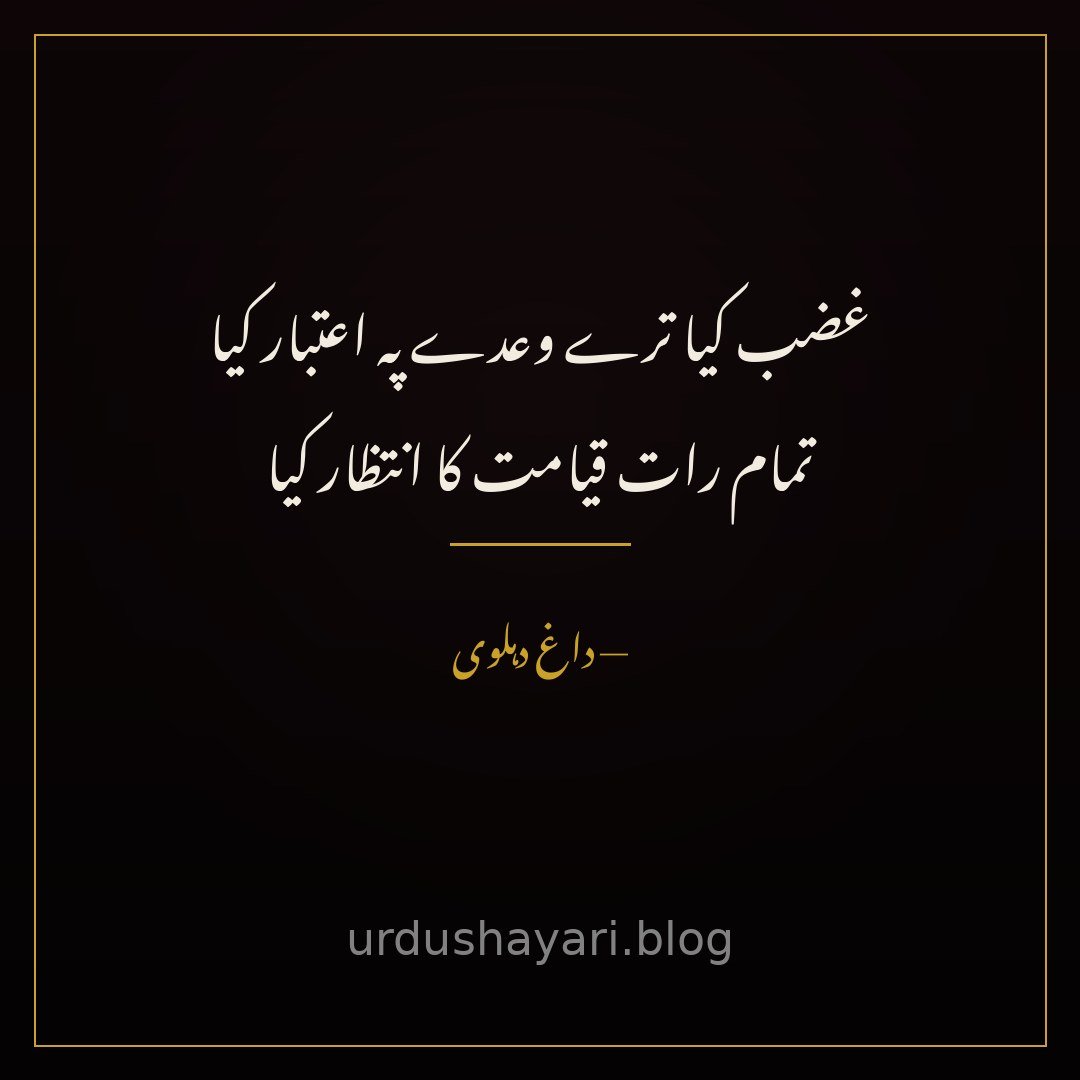
Daagh says trusting her promise was a calamity — he spent the whole night waiting for a doomsday that never came. The verse mirrors the pain of broken promises and nights that refuse to end. There is a quiet humor in the exaggeration, and behind it a very real ache.
دیکھ تو دل کہ جاں سے اٹھتا ہے
یہ دھواں سا کہاں سے اٹھتا ہے
dekh to dil ke jaan se uthta hai / ye dhuaan sa kahaan se uthta hai
— میر تقی میر
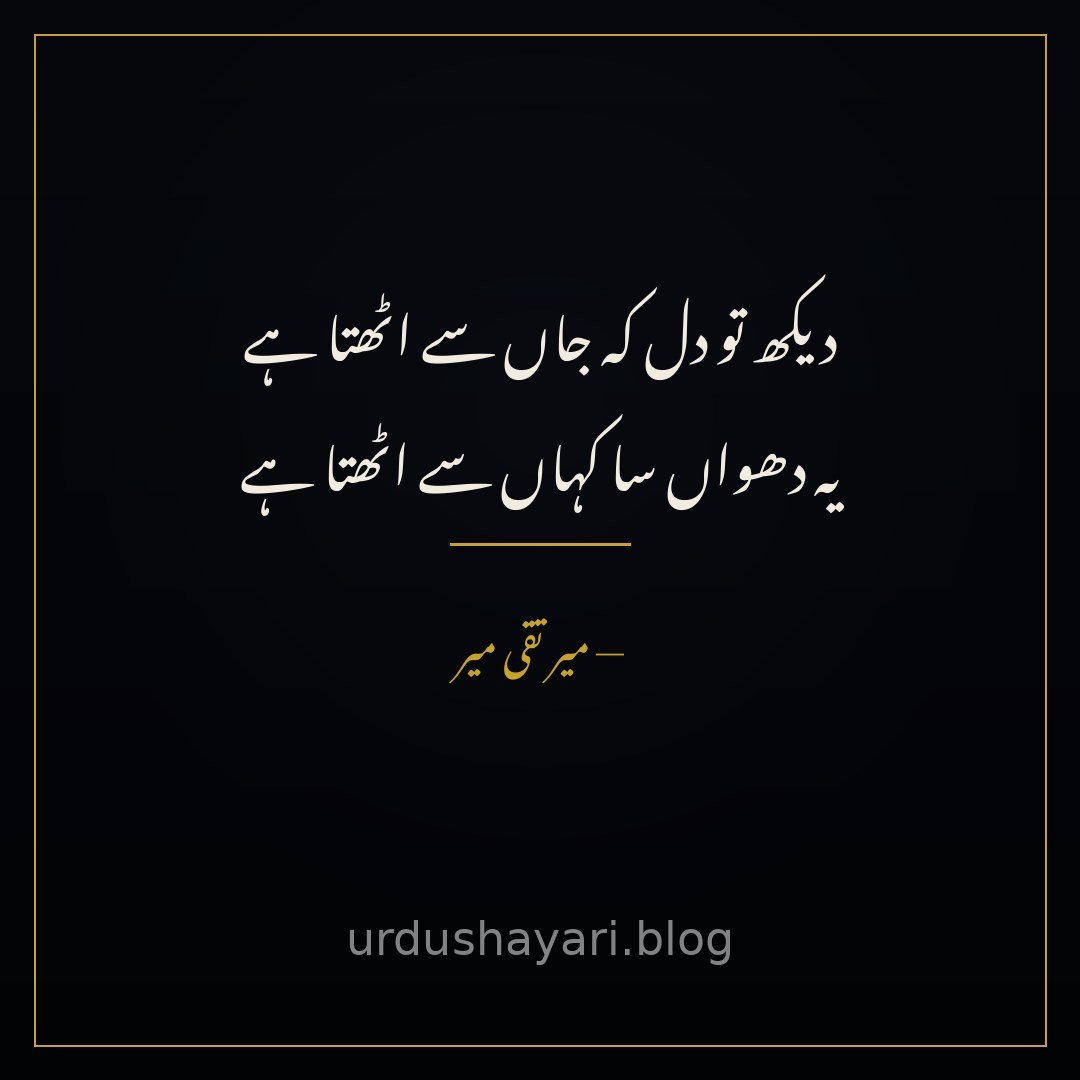
Mir tells his heart to look — a kind of smoke is rising from his very soul. The fire of love has burned so deep that its smoke now reaches the spirit; it is an exquisitely delicate portrait of inward burning. Few poets have rendered the invisible pain of love in such a visible, haunting image.
اور بھی دکھ ہیں زمانے میں محبت کے سوا
راحتیں اور بھی ہیں وصل کی راحت کے سوا
aur bhi dukh hain zamaane mein mohabbat ke siwa / raahatein aur bhi hain vasl ki raahat ke siwa
— فیض احمد فیض
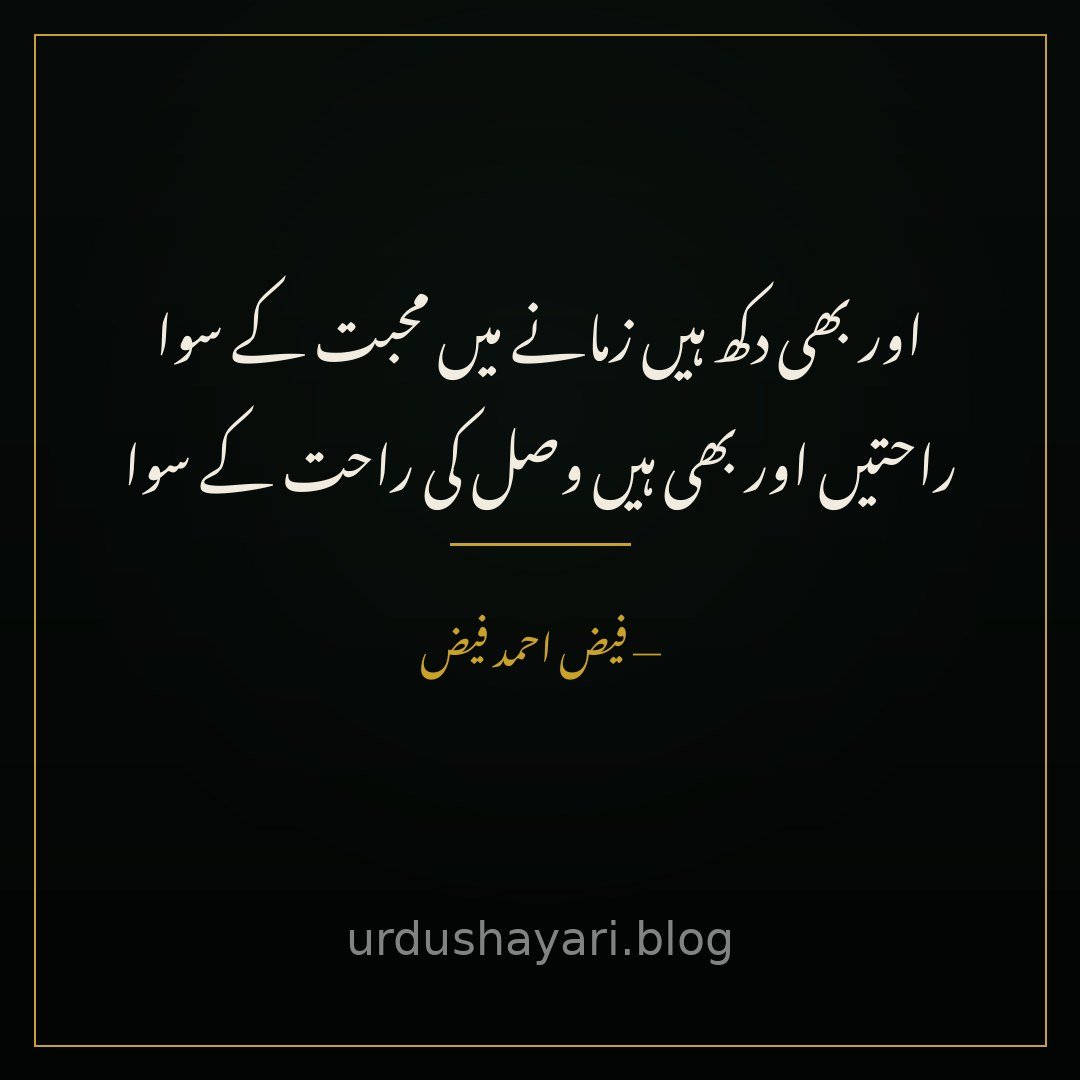
Faiz reminds us that besides love there are other sorrows in the world, and besides the comfort of union there are other comforts too. Do not drown in love so completely that you forget the rest of life — that is the message of the verse. It is Faiz’s signature move: lifting a personal feeling into a universal truth.
دیارِ عشق میں اپنا مقام پیدا کر
نیا زمانہ، نئے صبح و شام پیدا کر
diyaar-e-ishq mein apna maqaam paida kar / naya zamaana, naye subh-o-shaam paida kar
— علامہ اقبال
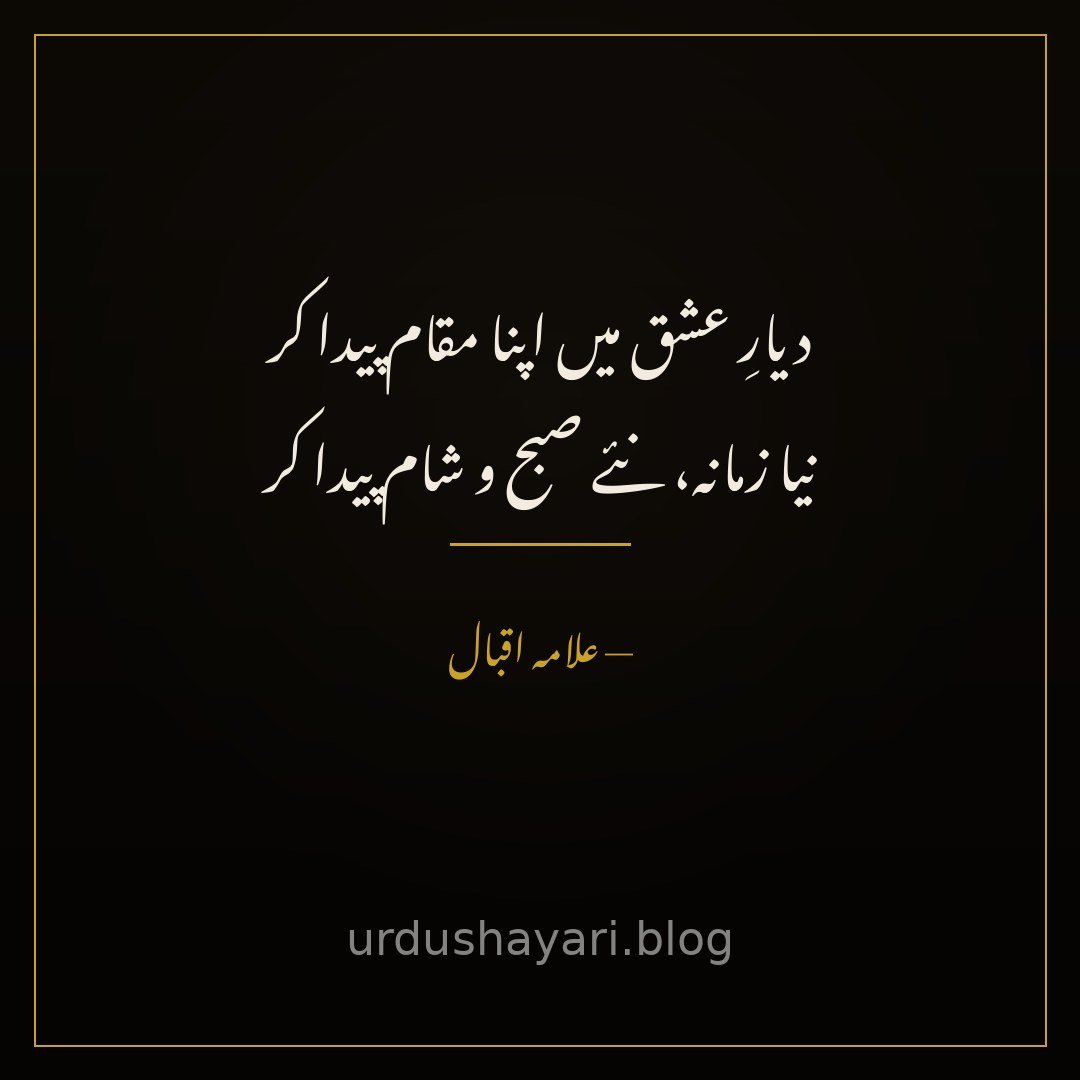
Iqbal urges us to carve out our own place in the land of love. Love is not merely a matter of feelings; it is the courage to build a new world — whoever truly loves becomes the creator of new eras and new dawns. The couplet turns romance into a call for self-creation.
About the Poets
Mirza Asadullah Khan Ghalib is the greatest name in Urdu poetry. His verse holds love, philosophy, and the deepest secrets of life side by side, and he treated love as the riddle of the universe itself. Allama Muhammad Iqbal turned ishq into a revolutionary force — in his vision, love transforms human destiny. Ghalib’s wit and Iqbal’s vision of the self are two pillars of Urdu poetry; without them, the very idea of love poetry feels incomplete.
Conclusion
These nine glimpses of love show that ishq has been the truest voice of the heart in every age. Whether it is Ghalib’s helplessness or Iqbal’s courage, Mir’s sigh or Momin’s remembrance — every verse touches some color of love. If you found one of your own memories in these couplets, then Urdu poetry has done its work. Keep loving, and keep finding it in poetry.
Frequently Asked Questions
Why is love poetry so popular in Urdu literature?
Love is every person’s private experience. When a poet speaks the language of the heart, the reader sees his own reflection in it — that recognition is what makes these verses immortal.
Can I use these couplets to express my feelings to someone I love?
Absolutely. Just be sure to include the poet’s name — it is both a literary courtesy and it lends your message a quiet dignity.
What is the difference between Ghalib’s and Iqbal’s concept of love?
Ghalib’s love is personal and emotional, turned inward upon the lover’s own heart. Iqbal’s love is revolutionary — he sees ishq as a force that awakens the self and changes destiny itself.